33 Grosvenor Place
Basement Lowering and Facade Monitoring
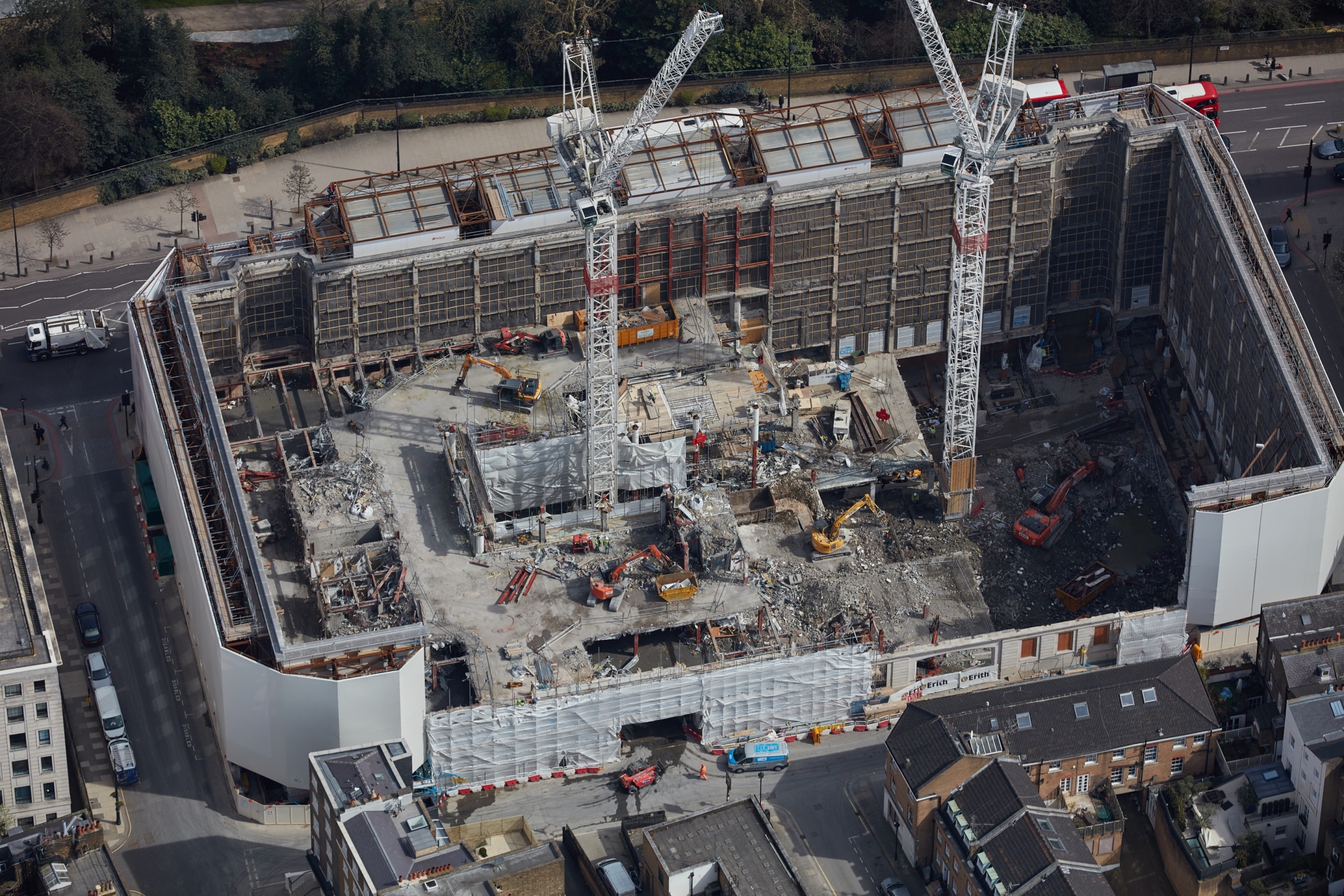
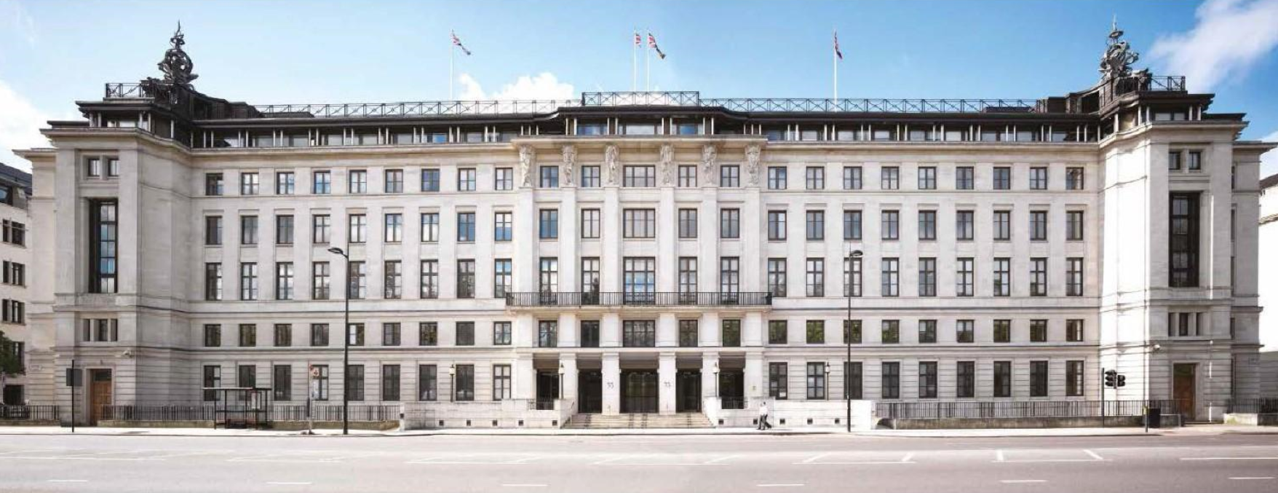
Swanton Consulting were employed by Erith Contractors to carry out the design of temporary works at the conversion of 33 Grosvenor. Place into a private health facility for the Cleveland Clinic. The site in London’s Belgravia was bounded by residential and office buildings with Buckingham Palace to the north east. Works at the former office building comprised soft strip, demolition, façade retention and associated basement works.
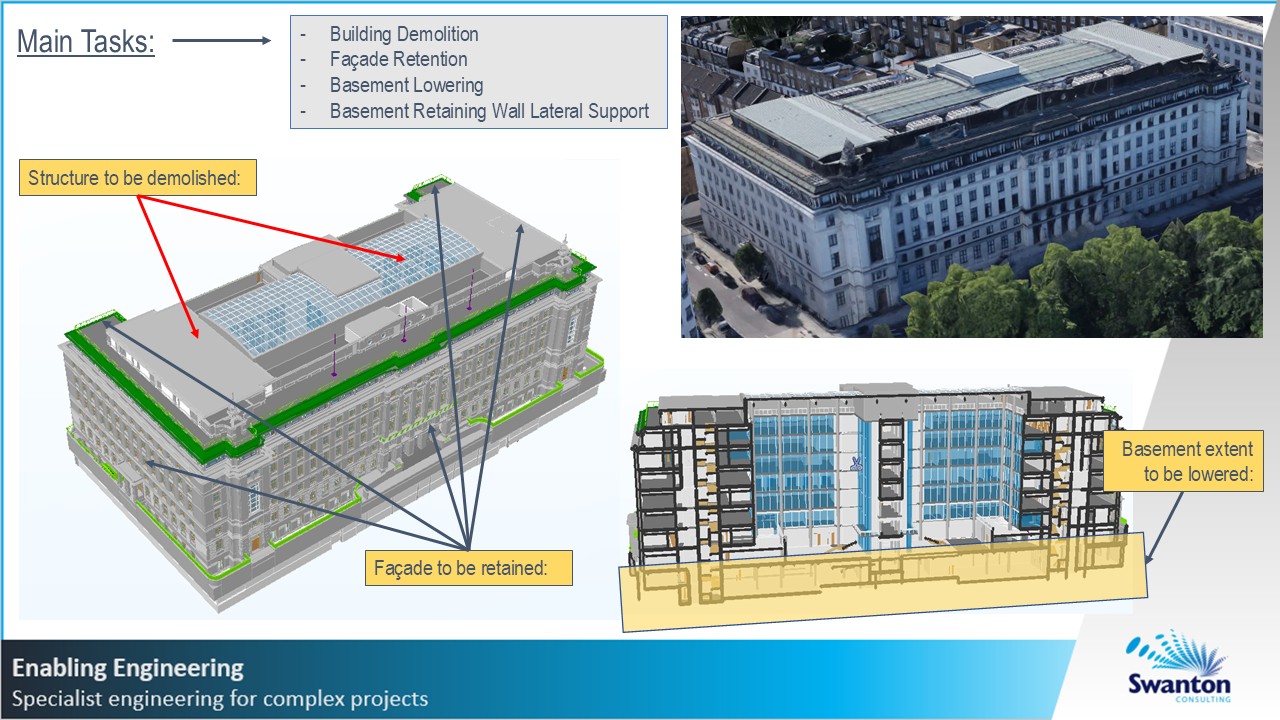
There were several engineering challenges involved with the design of the façade retention such as maintaining the pedestrian walkways, avoiding street furniture and maintaining access to existing services made more difficult by the requirement of large concrete kentledge blocks to stabilise the façade retention structure. The amount of kentledges required was minimised through the use of piles and the retaining wall. Midas and Tekla were used to engineer and model the façade design. The model could then be used to produce fabrication information as well utilising the 3D models to optimise the steel sections required and provide value engineering.
During early discussions with the new build main contractor it was agreed that the main façade retention structure would incorporate the welfare facilities for the follow on contractor by extending a portion of the structure to support 40 prefabricated cabins containing the site offices, welfare units and walkways as well as a wraparound walkway to allow the inspection and maintenance of the existing façade. The original scheme of temporary works relied on providing a combined structure for the façade retention, column jacking frame and basement propping. Swanton proposed a solution which consisted of three separate systems working with the same principle, focusing on accelerating construction speed by allowing different work disciplines to be executed simultaneously in several locations on site and minimising construction costs by reducing quantities of both material and labour.
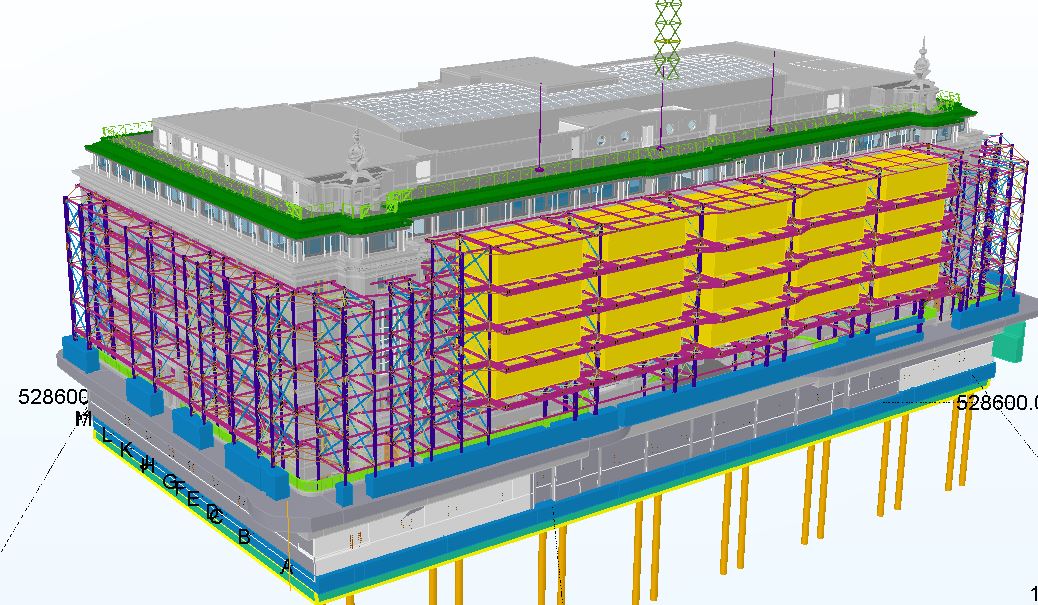
Bim Model of Facade Retention
Swanton also designed four adjustable and portable frames with special connections to allow for the ‘extension’ of the existing façade columns down to a new founding level (basement lowering). This was as a result of the new basement level being lower than the existing. The frames were designed to carry a load of 4MN per column, respecting the deflection restrictions and spanning 12m.
Swantest carried out concrete ferro-scanning in the perimeter walls to ascertain the reinforcement in the wall, after noticing the uncertainty of reinforcement, we designed two levels of walers with raking props transferring the loads on the raft slab to support the existing retaining wall. Swanton provided support from tender through to siteworks including the design of a ramp for vehicle access and egress as well as a gravity tower crane base with reinforced concrete base.
Aerial View of Site