40 Broadway
St James’ Park, London
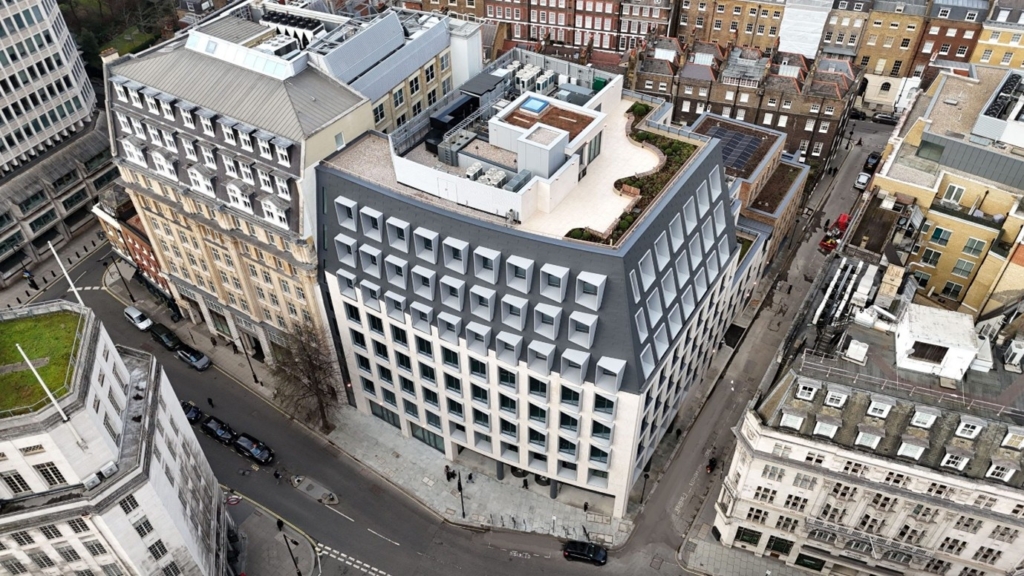
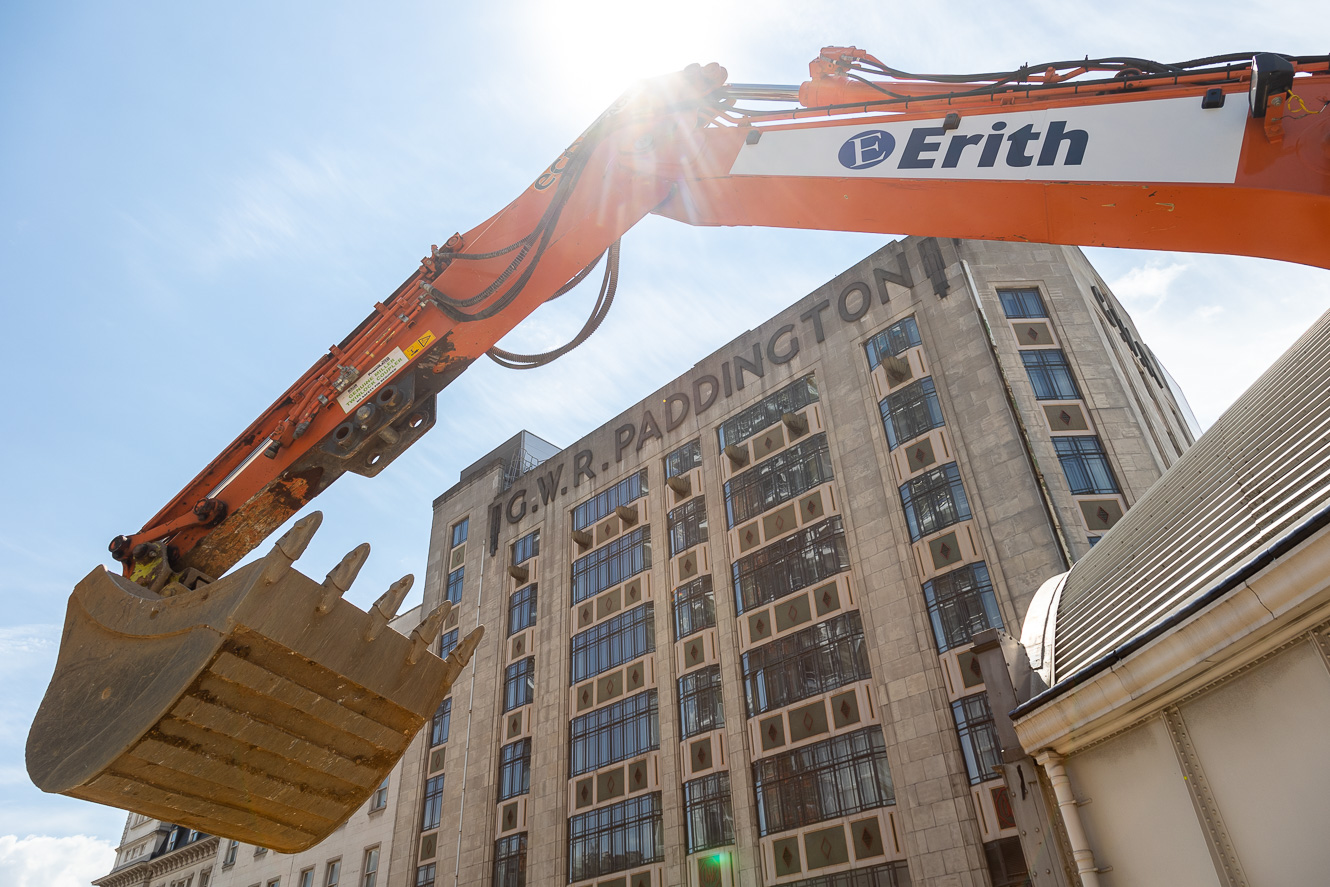
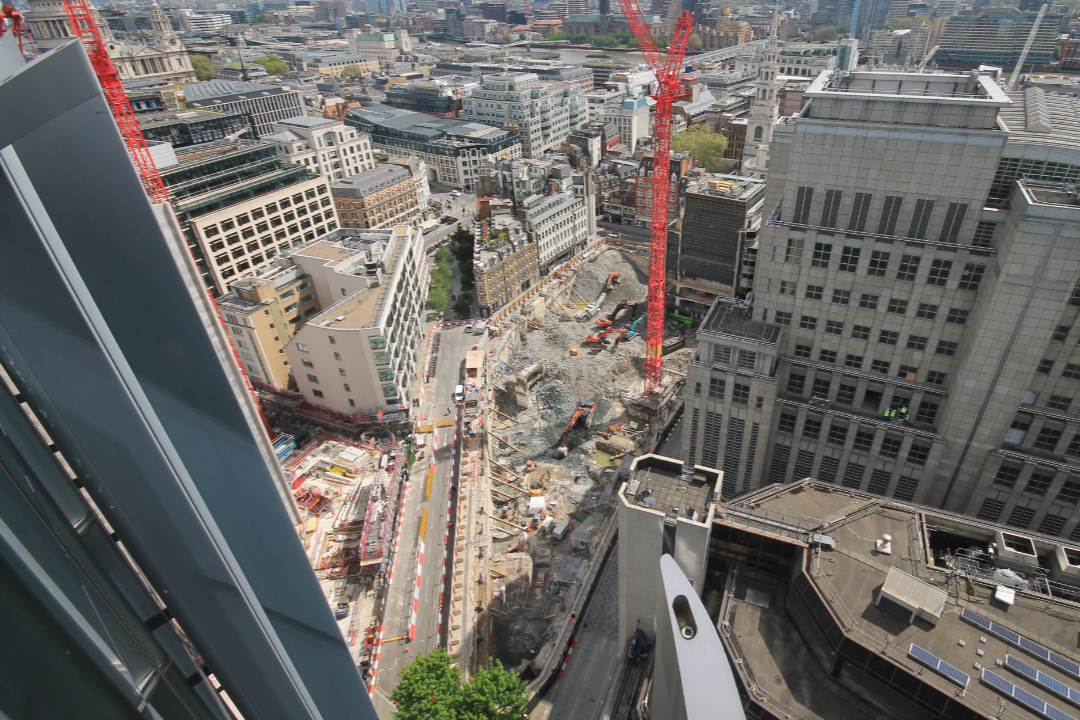
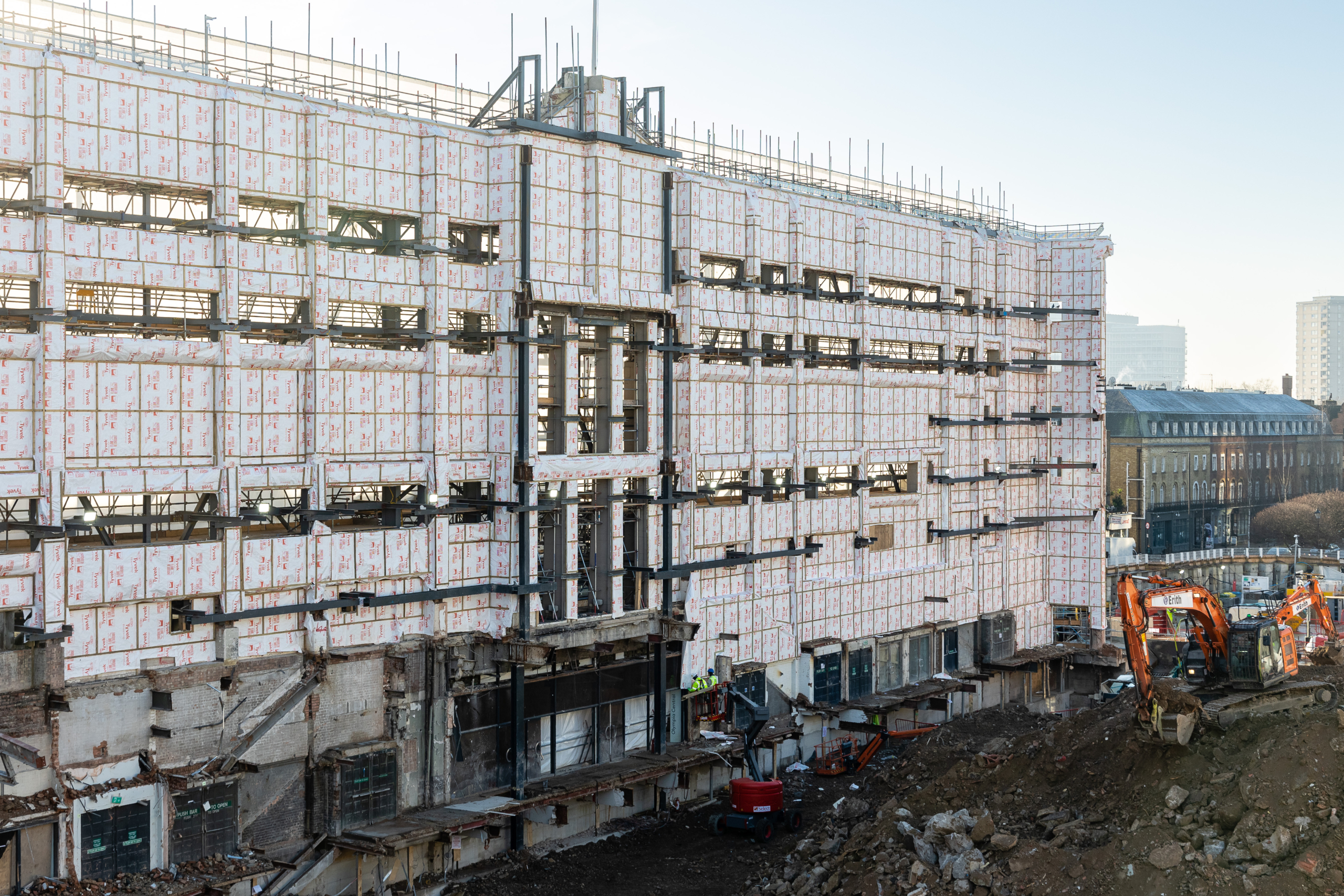
Erith Contractors was appointed by Tellon Capital to deliver the demolition, basement and core construction, and associated enabling and temporary works of the 40 Broadway project, which ultimately became the global headquarters of Formula 1.
Main temporary works included various party wall interfaces, underpinning, retaining wall assessments and propping, tower crane base, sheet piling design, and basement propping among others.
The existing development consisted of a set of interconnected buildings built in several periods, the oldest ones being from the 1920s, and the latest from the 1980s. Structural type and forms were according to the respective eras, with the oldest ones being steel frame and masonry infill walls, while the new ones were reinforced concrete frames and shear walls.
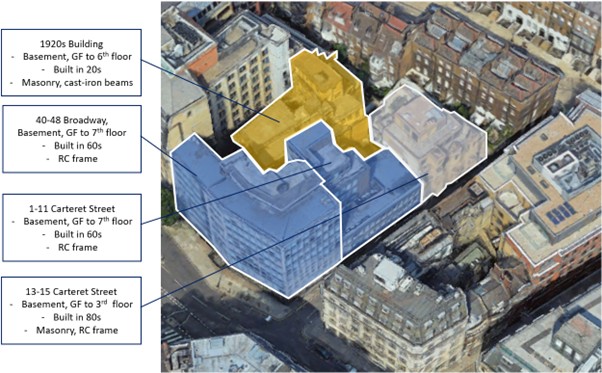
Google Maps view with building ages highlighted
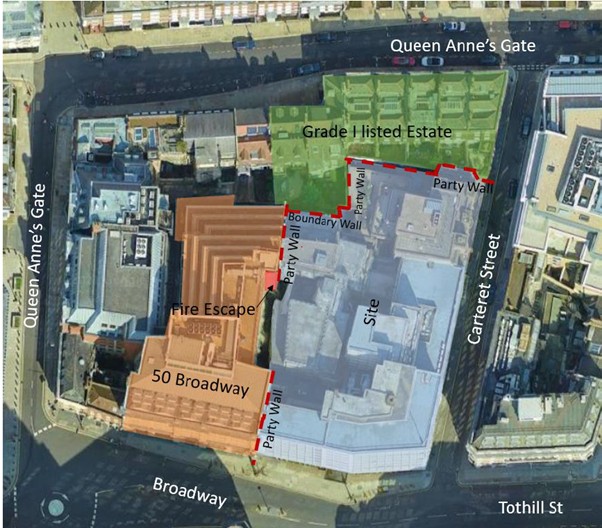
Site layout with party walls shown
Archives and Investigations
Throughout the duration it was important to gather as much information as possible, mainly about the interfaces with neighboring properties and surrounding highways. While in some cases robust best practice temporary works can be used, on this project there were specific constraints why these had to be rationalized or designed out if possible. To obtain the necessary information we engaged with various archives including Westminster Building Control Archives, we conducted site investigations and collected all possible information to aid with designing the most suitable temporary works solution.
We were able to obtain good quality record information about all buildings of the site whether through record drawings, online archive photos or site investigations.
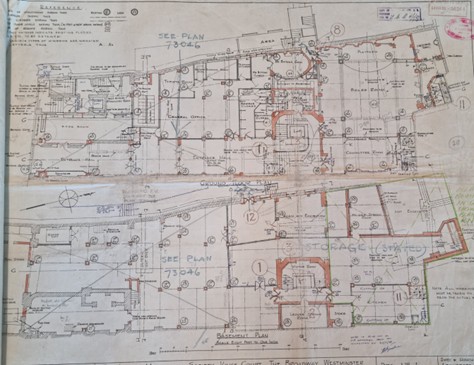
48 Broadway plans obtained from archives
Party Walls – 50 Broadway
This building was completed around 1924 and became the headquarter of the Secret Intelligence Service, and MI5 later. Through the party wall process we obtained a few structural drawings, but these were not detailed enough with regards to the wall thicknesses and connection details into existing slabs. As the party wall after demolition was about to be exposed across a 32 meter height to wind loads.
Investigations were performed with the help of our internal division, Swantest, and collected information was sufficient to justify the party wall connections without the need to install extensive tiebacks or strengthening.
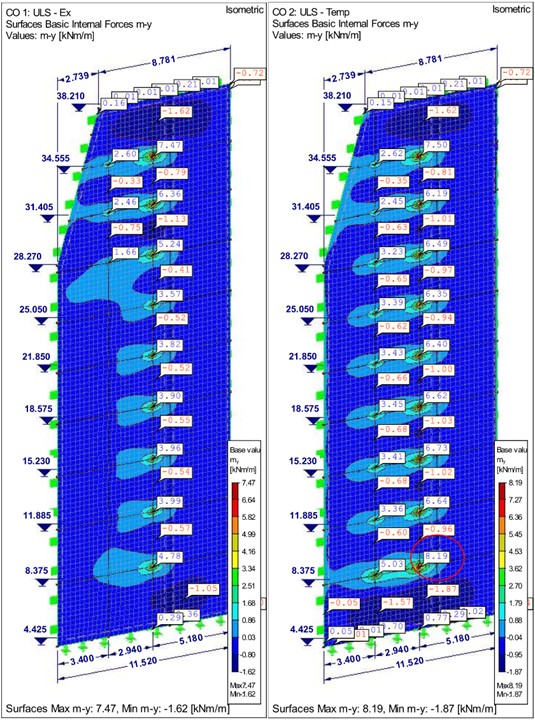
Comparative analysis of 50 BW party wall in existing and temporary stages to wind loads
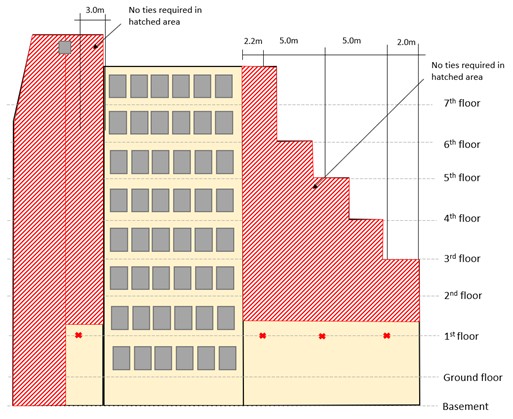
Outcome of temporary stability analysis with minimal required tying highlighted at first floor
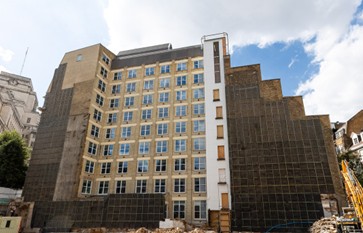
Site photo of 50 BW party wall after demolition
Party Walls – Queen Anne’s Gate
Queen Anne’s Gate is a Grade I listed estate on the northern boundary of the site with a listed garden wall between the two properties. As the structures next to the wall were demolished the fragile garden walls became exposed to wind loading. The previous development added a doubling internal concrete liner wall (See gray areas on fig XX) but the interface between the two was only transferring compressive forces. We developed a calculation model that took into account the double skin masonry and concrete wall, the level difference and the ground surcharge coming from the neighbor’s side. The temporary structure ultimately became a strategically placed RMD Slimshor frame possible to install inside the existing building and a series of helical ties connecting the wall into the return walls for support, permanently strengthening the walls. This proposal was then checked and approved by English Heritage.
Avoiding A-frames offered significant space on the project side for subsequent demolition and construction activities, while remaining safe and sympathetic to heritage nature of the garden walls.
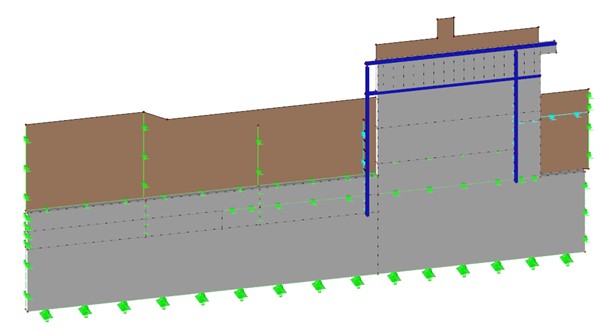
Queen Ann’s Gate garden wall – 3D view of analysis model
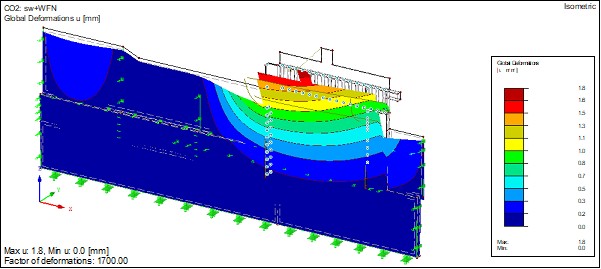
Queen Ann’s Gate garden wall – deformations to wind load
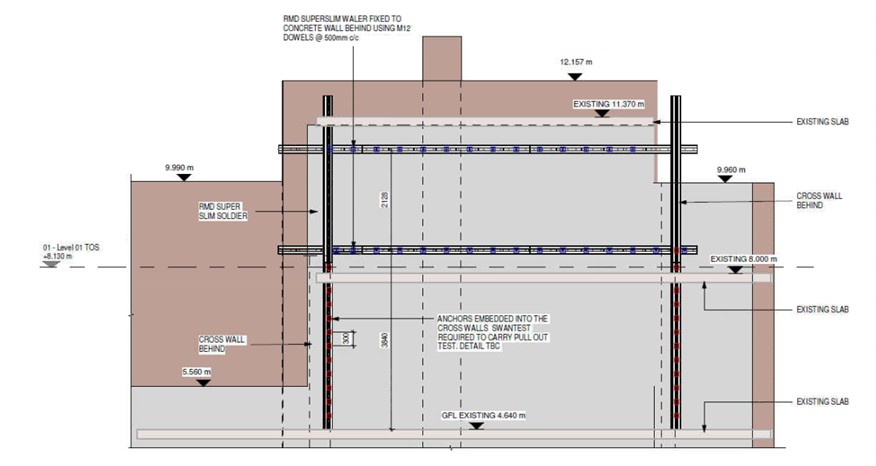
Queen Ann’s Gate garden wall – proposed temporary works
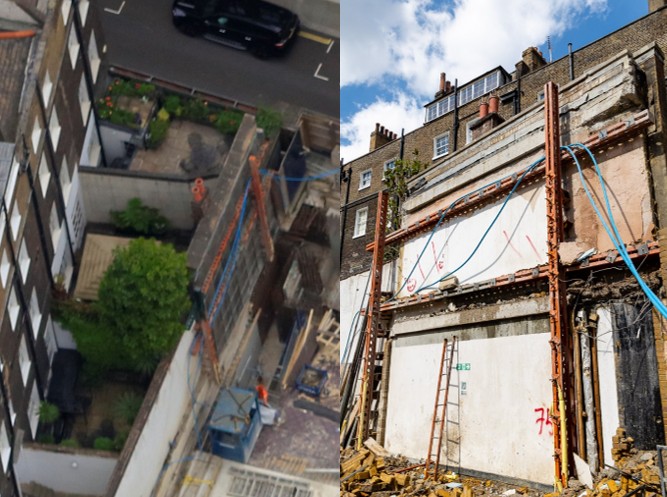
Queen Ann’s Gate garden wall – installed temporary works
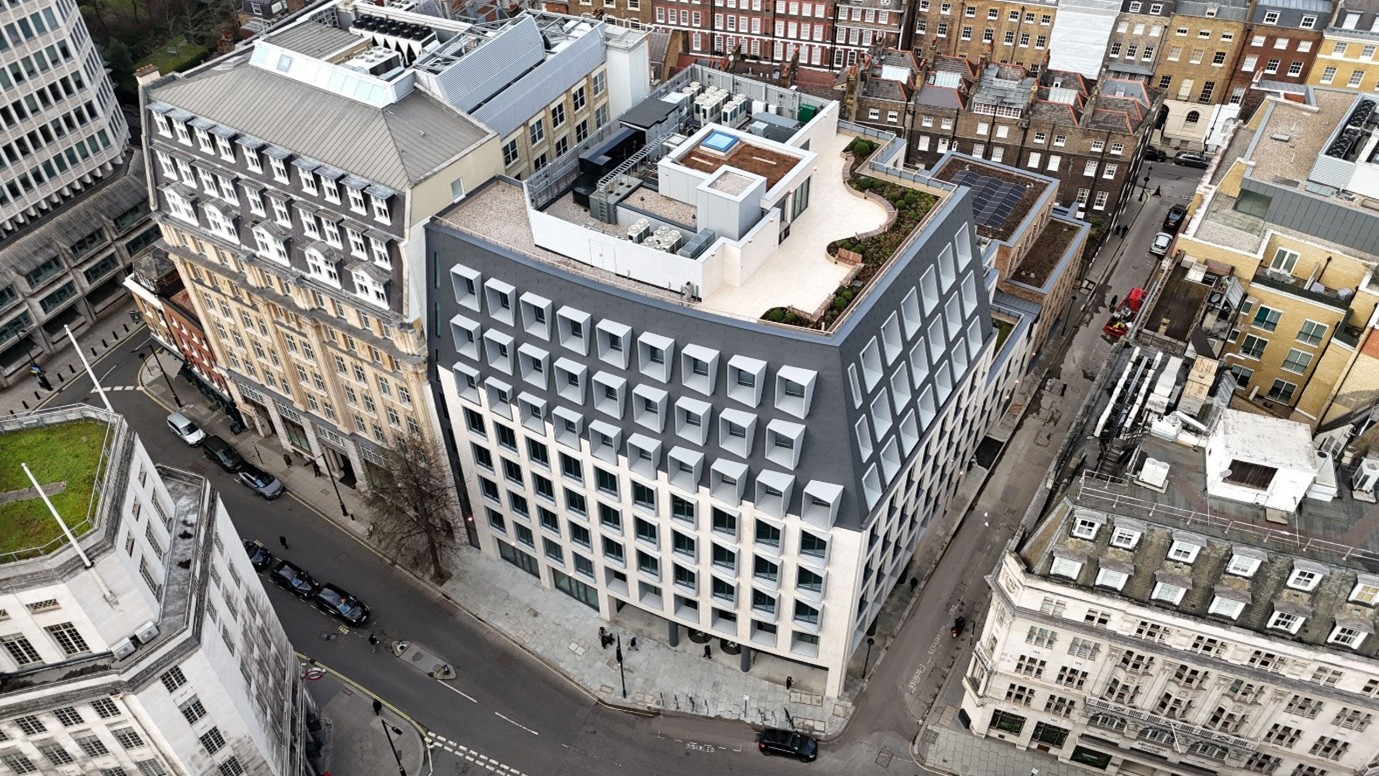
40 Broadway – finished development